
As I have mentioned several times in this space, we are amid a Mass Extinction Event. It is at least the ninth Mass Extinction Event in planetary history.
It is also proceeding more rapidly than any other Mass Extinction Event, and it is irreversible.
As I have also mentioned several times in this space, insects—more accurately called invertebrates—have been decimated. As the invertebrates go, so go we and all life on Earth.
An article in the 3 June 2025 issues of The Guardian is titled ‘Half the tree of life’: ecologists’ horror as nature reserves are emptied of insects. Here’s the subhead: “A new point in history has been reached, entomologists say, as climate-led species’ collapse moves up the food chain even in supposedly protected regions free of pesticides.”
The article in The Guardian begins with a story about famous ecologist and conservation biologist Daniel Janzen: “Daniel Janzen only began watching the insects – truly watching them – when his ribcage was shattered. Nearly half a century ago, the young ecologist had been out documenting fruit crops in a dense stretch of Costa Rican forest when he fell in a ravine, landing on his back. The long lens of his camera punched up through three ribs, snapping the bones into his thorax.
Slowly, he dragged himself out, crawling nearly two miles back to the research hut. There were no immediate neighbours, no good roads, no simple solutions for getting to a hospital.
Selecting a rocking chair on the porch, Janzen used a bedsheet to strap his torso tightly to the frame. For a month, he sat, barely moving, waiting for his bones to knit back together. And he watched.
In front of him was a world seething with life. Every branch of every tree seemed to host its own small metropolis of creatures hunting, flying, crawling, eating. The research facility lay in a patchwork of protected rainforest, dry forest, cloud forest, mangroves and coastline covering an area the size of New York, and astonishingly rich in biodiverse life. Here, the bugs gorged, coating the leaf litter with a thick carpet of droppings.
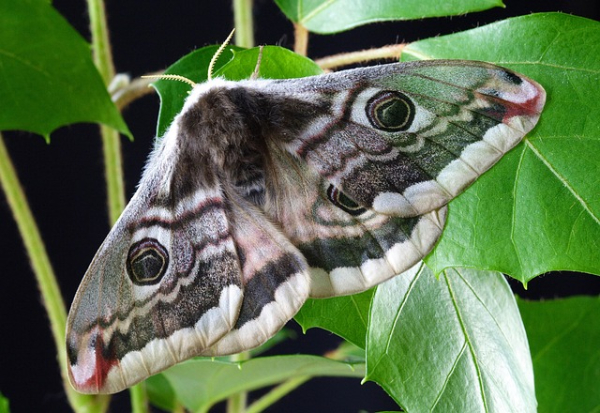
But the real show was at night: for two hours each evening, the site got power and a 25-watt bulb flickered on above the porch. Out of the forest darkness, a tornado of insects would flock to its glow, spinning and dancing before the light. Lit up, the side of the house would be “absolutely plastered with moths – tens of thousands of them”, Janzen says.
Inspired, he decided to erect a sheet for a light trap with a camera – a common way to document flying insect numbers and diversity. In that first photograph, taken in 1978, the lit-up sheet is so thickly studded with moths that in places the fabric is barely visible, transformed into what looks like densely patterned, crawling wallpaper.
Scientists identified an astonishing 3,000 species from that light trap, and the trajectory of Janzen’s career was transformed, from the study of seeds to a lifetime specialising in the forest’s barely documented populations of caterpillars and moths.
Now 86, Janzen still works in the same research hut in the Guanacaste conservation area, alongside his longtime collaborator, spouse and fellow ecologist, Winnie Hallwachs. But in the forest that surrounds them, something has changed. Trees that once crawled with insects lie uncannily still.
The hum of wild bees has faded, and leaves that should be chewed to the stem hang whole and un-nibbled. It is these glossy, untouched leaves that most spook Janzen and Hallwachs. They are more like a pristine greenhouse than a living ecosystem: a wilderness that has been fumigated and left sterile. Not a forest, but a museum.
Over the decades, Janzen has repeated his light traps, hanging the sheet, watching for what comes. Today, some moths flutter to the glow, but their numbers are far fewer.”
The article then quotes Janzen as he summarizes his findings: “It’s the same sheet, with the same lights, in the same place, looking over the same vegetation. Same time of year, same time of the moon cycle, everything about it is identical. There’s just no moths on that sheet.”
This is horrible news, of course. As I have reported many times in this space, invertebrates provide many actions that assure our continued survival, and therefore the survival of life on Earth. The article in The Guardian describes several factors that have contributed to the demise of invertebrates, including pesticides, fertilizers, light pollution, chemical pollution, loss of habitat, and the growth of industrial agriculture. In many cases, these contributors were restricted to local areas: Invertebrates are sensitive organisms, and they have declined as a direct result of pollution. As the article in The Guardian points out, this time is different.
Janzen’s spouse is quoted about the damage they have observed in preserved areas: “[W]hat we see here in the preserved areas—that as far as we can tell, are free of even these destructive insecticides and pesticides—even here, the insect numbers are going down horrifyingly dramatically.”
The Guardian points out that long-term data for insect populations is still difficult to find. However, Janzen and Hallwachs have joined other scientists around the world in recording huge die-offs of invertebrates in nature reserves. Examples are provided for Germany, the US, and Puerto Rico, with invertebrates declining 75-83% in a few decades. According to The Guardian, “[T]hese declines are occurring in ecosystems that are otherwise protected from direct human influence.”
An entomologist who has devoted much of his career to documenting insect life in the U.S., especially rare caterpillars, is then asked about a recent trip to Texas: “I just got back from Texas, and it was the most unsuccessful trip I’ve ever taken. There just wasn’t any insect life to speak of.
“Everything was crispy, fried; the lizard numbers were down to the lowest numbers I can ever remember. And then the things that eat lizards were not present – I didn’t see a single snake the entire time.”
This is a classic example of the importance of invertebrates within an ecosystem. Invertebrates are small and seemingly insignificant. The entomologist quoted about his trip to Texas is quoted again: “[W]e’re talking about nearly half the tree of life disappearing in one human lifetime. That is absolutely catastrophic.”
The bottom line in The Guardian article comes from Janzen’s spouse: “One of our very good friends—he now does not have the emotional courage to hand up a sheet to collect moths at night. It is too devastating to see how few there are.”
When lifelong researchers stop conducting research because they are horrified by the results of their own research, we have a problem. As we circle the drain, I thought researchers would be the last to throw in the proverbial towel. Sadly, I was mistaken.
Author
"Dr. Guy McPherson is an internationally recognized speaker, award-winning scientist, and the world’s leading authority on abrupt climate change leading to near-term human extinction. He is professor emeritus at the University of Arizona, where he taught and conducted research for twenty years. His published works include 14 books and hundreds of scholarly articles. Dr. McPherson has been featured on TV and radio and in several documentary films. He is a blogger, cultural critic, and co-host of his own radio show “Nature Bats Last.” Dr. McPherson speaks to general audiences across the globe, and to scientists, students, educators, and not-for-profit and business leaders who seek their best available options when confronting Earth’s cataclysmic changes." source