
CCC students can earn a certificate as a Susainable energy Technician
What are the sources of your homes air leaks and how do you go about weatherizing to save energy? How could you use compost to heat a five-bedroom home? Could a local water company install a micro-hydro system which would pay for itself in approximately three years and then begin generating electricity for the grid and revenue for the water company?
These are just a few of the topics explored as class projects by the very first group of students in Clatsop Community Colleges Sustainable Energy Technician (SET) certificate program, launched in January. This is pretty exciting in view of all the work thats gone into getting to this point, let alone the opportunity it represents for area residents to better arm themselves as they look for work in hard times. Its the culmination of statewide efforts by public and private entities to help revitalize Oregons 24 rural counties. Its also fairly cutting-edge stuff, coming out of research thats identified a trend in Oregons economy: growth in the number of green jobs in the state pretty good jobs, too!
The SET certificate will give entry-level employees basic skills needed in the variety of industries that have green jobs. While it may ultimately be adopted statewide, the program has been designed to meet the needs of rural Oregon, where companies tend to be smaller, occupations may have only one or two local openings and employers want workers who have basic technical skills that lend themselves to different kinds of work and work settings as employer requirements and labor market demands shift.
Essentially, students in the program learn about electrical, mechanical and heating/cooling systems within the framework of sustainability and current green technology. Graduates come away with technical skills that are easily transferred and adaptable to a variety of green jobs. The colleges one-year SET certificate corresponds to the one-year Green Technician certificate (GTC), offered at nine other community colleges throughout the state.
CCC and its counterparts throughout the state participate in the SET program under the auspices of two agencies: The Oregon Consortium (TOC) and the Oregon Workforce Alliance (OWA), which administer the Workforce Investment Act and a variety of other grants and projects in the state. Its their intent that the program be a catalyst for positive change in rural communities, keeping them livable, restoring prosperity and contributing to a brighter future.
Program instructor and Astorian Christopher Paddon has already taught an Introduction to Sustainability course at CCC, which anyone seeking a certificate must complete. He presented students with an overview of sustainability, depletion of nonrenewable energy sources and renewable energy technologies including solar, wind, hydropower, geothermal, biomass and oceanic energy. Almost 60 individuals from all over the state received their instruction from Paddon online, while five locals gathered weekly at CCCs MERTS campus. Weekly online forums substituted for class participation, allowing students to get to know each other, discuss assignments, textbooks and ideas and get instructor feedback.
In assigning final projects for the quarter, Paddon, who has a B.A. in Industrial Design from San Jose State University and owns a consulting business for renewable energy, challenged students to make your ideas real. And they did.
One student posited, "By having an anaerobic digester at home, you gain not only some free gas for the barbecue, and compost tea and compost for your house plants or garden, you also help out with the greenhouse gases warming our planet."
Another suggested, "All stoves, new and old, can be accused of wasting energy out of their chimneys. I plan on exploring a solution that targets the possibility of recapturing some of the heat that naturally wants to rise immediately out of the combustion chamber of a woodstove up the chimney and outside into the cold, never to heat any part of your home on its short journey outside." Still another offered up, "I feel that the city of Bend would benefit if we installed solar street lights instead of electrical ones on a go-forth basis."
These and other equally colorful and innovative designs were submitted by Paddons students, along with anticipated costs, materials lists and references supporting their research and project feasibility. Enthuses the instructor, Im really pleased with the work many of these students did. Their projects are viable and I think several of them will be implemented. His next course, Building Energy Analysis, will be mostly an online affair but will end up in a lab in Corvallis. Paddon wont mind, saying, "Ill finally get to meet and work with my students face-to-face."
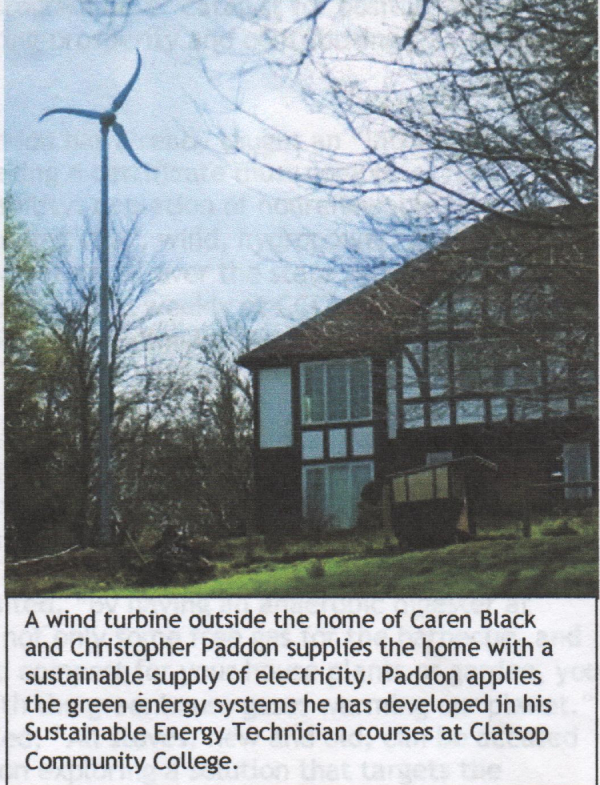
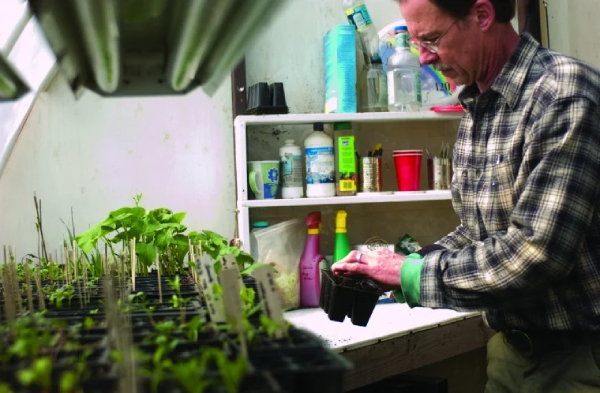 Christopher Paddon, who is teaching Introduction to Sustainability at Clatsop Community College,