
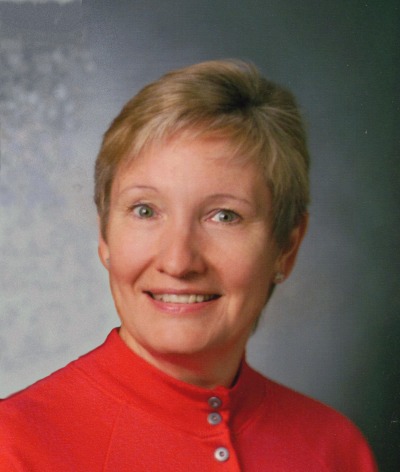
Caren Black plans the escape routes that will lead her interns to safety from a consumer culture mired in dwindling natural resources. Her husband, Christopher Paddon, designs the technology that will keep them afloat.
Together at their “off-the-grid” estate, they operate the Titanic Lifeboat Academy, an immersive educational experience dedicated to helping people live more local, self-reliant, sustainable existences.
“I don’t want you to think outside the box,” said Black, a teacher and administrator for much of her life. “I want you to leave the box.
“I do all the educational programs. Christopher does all the technological designs.”
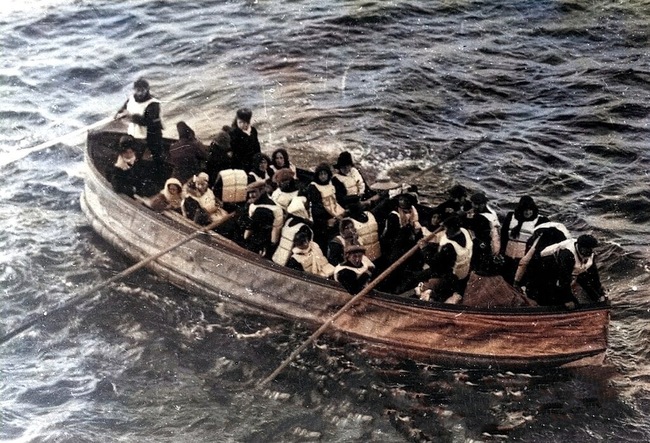
The title of the academy, a 501(c)(3) educational nonprofit, refers to the Titanic which sank in 1912 and had too few and improperly used lifeboats, resulting in the deaths of 1,517.
“The incubator for that came from school,” said Paddon, an expert in alternative energy and an instructor at Clatsop Community College. “When we talked about Western society, we kept on coming back to the metaphor about the Titanic.”
They worry about society consuming an ever dwindling fuel base and prolonging an unsustainable lifestyle.
Their course immerses interns at least three weeks at the academy, a three-acre, highly sustainable farm and estate Black and Paddon purchased in 2004. While there, interns learn everything from deep ecology, solar power production and efficient heating techniques, to composting, animal husbandry and other smaller life choices.
“You really need someone to hold your hand through it,” said Black. “It’s uncomfortable to find that a lot of what we know just isn’t so.”
Life on the Grid
Black graduated from Northwestern University in 1972 with a bachelor’s in music and a master’s in theater, before heading West to the San Fransisco Bay Area to teach. “The headline in California then was 15,000 unemployed teachers in California,'” she said. Black eked out a niche, opening the Children’s Repertory Company, an after-school performing group, in 1975. A group high point, she said, was renting the Concord Theater in Concord, Calif. and performing for famous writer, actor and musician Anthony Newley, responsible for the James Bond “Goldfinger” title song and music from such movies as “Willy Wonka and the Chocolate Factory.” In 1979, she and the group toured throughout California and Nevada during the International Year of the Child.
Black later moved to Los Angeles, intent on opening a performing arts high school but instead working at Jozak-Decade Productions, created by Gerald Isenberg and responsible for such hits as “Forbidden” and “The Clan Of The Cave Bear.”
Black moved in the mid-1980s back to northern California and to her first business, an ice cream shop called “Mountain Munchies” she ran for three years in the Santa Cruz Mountains.
“I wanted to get out of LA more than I wanted to get into an ice cream shop,” she said.
In 1987, Black started consulting through a Bay Area-Small Business Development Center.
After earning her teaching credentials from San Jose State in 1994, Black started teaching for the Campbell School District outside San Jose, Calif. Black finished  her teaching career in Aptos, Calif. as an administrator, a job from which she retired in 2004.
Going Off the Grid
“We met on match.com,” said Black about meeting her husband. “We met face to face on St. Patrick’s Day. You try to find somebody who believes in the same things you do, instead of going on appearances.”
Paddon was a ranch manager and solar technician living in the Santa Cruz mountains.
“When I met him, he had a small cabin with a sign: Titanic Lifeboat Construction Company,'” said Black.
The two hit it off and married in 2002 at Stonehenge in England.
Realizing the impending collapse of the housing market, they sold their houses in 2004 and bought three acres and a Tudor “mini-estate” on Youngs River Road.
Solar panels and one of Clatsop County’s first wind turbines, along with wood heating and some stringent conservation, provide 75 percent of the couple’s power supply. Paddon and Black raise animals, grow crops, dry wood with a solar heating system and otherwise design their property to be as self-sufficient as possible.
Fourteen interns have gone through the Titanic Lifeboat Academy, living and soaking in the library of information the couple provide on country living.
They hosted a radio show – “Titanic Lifeboat Show” – for three years on KMUN, speaking with local, national and international experts on sustainability.
After attending the Alternative Gift Market in Manzanita, Black created a similar concept in Astoria – Gifts That Make a Difference – in 2006, with the help of local radio personality and activist Carol Newman. “They do a lot with a little money and a lot of volunteer time,” said Black of local nonprofits.
She and Paddon belong to Lewis and Clark’s Community Emergency Response Teams, as well as their own neighborhood emergency team.
They’re operators of one of more than 600 ham radios in Clatsop County and are starting to form a seed exchange for local growers.
Black said everything she and Paddon do is about localizing people’s lives and moving beyond the consumer-driven reality. “It’s conveyed by the corporate media for profit,” she said. “Once you start working with the land and animals, the social construct we live in becomes inadequate.”
For more information on the Titanic Lifeboat Academy, visit titaniclifeboatacademy.org