Saving the world - and a few bucks while you're at it.
“Permaculture*” is usually defined as “permanent agriculture,” the kind of agriculture that doesn’t destroy its host Earth, but respects and replenishes it. A more inclusive definition is “permanent culture,” including everything from nuclear disarmament to sustainable agriculture, peak oil, green energy, living lightly and backyard gardens – not to mention the entire organic farming movement. It’s a huge subject – a mindset and a way of living, really. But too big a subject for one article, unless the writer wants to induce mass hysteria or mass narcolepsy.
Let’s focus on just one aspect: reducing your electrical/carbon footprint. Not so much because of the ethical imperative to reduce consumption – a mighty motivation – but because reducing costs in tough times just makes sense.
Here are two true-life case studies, one anonymous, one not. Our anonymous fellow first: a widower living on a small income in a “plus-55” mobile home park. Call him Fred.
For Fred, keeping his power bill reasonable isn’t just a good idea, it’s essential; he hates being cold, but he also likes to eat. A $260 power bill in January rang his chimes; it was 16 percent of his income.
Fred’s single-wide trailer is heated with a forced-air electric furnace that seems to run constantly. “This place has the R-value of a tin can,” he says. “I wish I had a wood stove for heat, but I can’t afford to buy one of those new ones that don’t pollute so much – and I’d still have to buy firewood. So I just turned down the heat.”
Sweaters and long underwear helped – for about two days. Fred’s one luxury is his laptop computer, which he uses to keep in touch with the world and to write occasional articles. He found it hard to type wearing gloves.
So he bought a cheap radiant heater – visualize a tiny satellite dish glowing red. Fred’s new heater sits on the floor five feet in front of his desk when he’s on his computer, and moves with him when he’s in couch potato mode in the living room. “It’s a revelation,” he says. “The heater keeps me toasty. And face it, the house doesn’t care whether it’s cold. I’m the one who shivers.”
Fred’s bedroom is cold. “But that’s why I have two small dogs – and two down comforters.” He adds, “I figure Britain became Great without central heat, and I can too.” He does confess to keeping his bathroom warm with a small oil-filled electric radiator, “Because I’m a wee-hours frequent user and a confirmed wuss.”
Fred now washes his clothes in cold water and uses his clothes dryer rarely. His bathroom is cluttered with damp jeans and shirts hanging from the shower rod and various hooks, but they dry fast because the room is warm. He uses the bathtub’s hot water tap to preheat his vacuum bottle before using it to store his day’s supply of hot coffee, after using the hot water to rinse his previous day’s dishes (scrubbed in cold water). Why the bathtub faucet instead of the kitchen sink’s? It’s closer to the water heater; one foot away, instead of 30. It takes a minute or so for hot water to reach the kitchen – water that would have to be reheated in the water heater.
The small savings add up. Fred cut his power bill by $100 worth of kilowatts in each of the past two months. He could have saved even more by replacing all his lightbulbs with fluorescents – but he had done that before the wake-up call of his January power bill. With warmer weather coming, his power savings will be less significant, but he is stuffing the cubicle holding his water heater with fiberglass insulation to save a few dollars a month more, year-round. And bit by bit, he’s adding insulation to the walls and ceilings of the trailer.
Bottom line: Fred is in better shape financially and feels good about reducing his electrical/carbon footprint.
At the opposite end of the Permaculture* spectrum – and way more impressive in terms of commitment and action – is Astoria’s Titanic Lifeboat Academy, a 501(c)3 nonprofit piloted by Caren Black and her partner, Christopher Paddon (titaniclifeboatacademy.org).
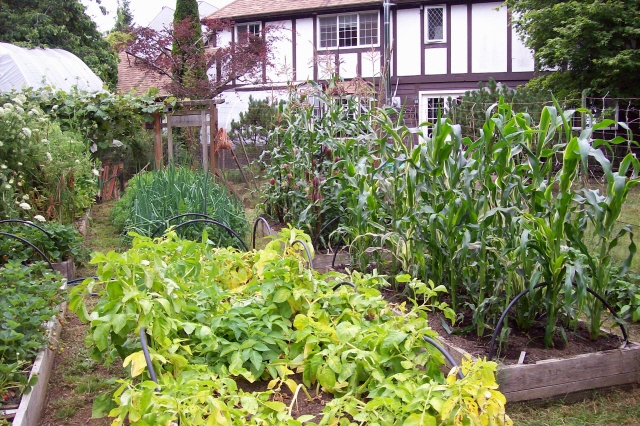
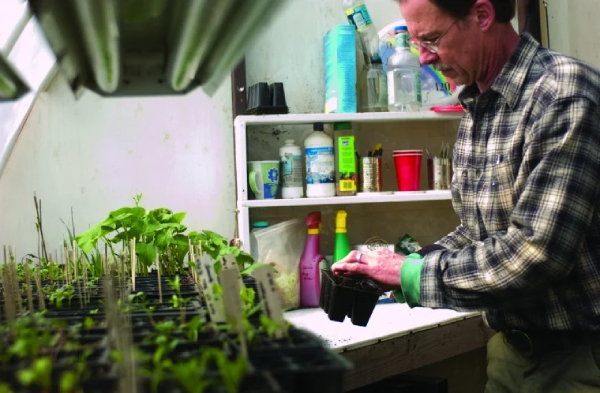
Black and Paddon truly live the earth-sustaining and life-sustaining principles of Permaculture. They raise much of their own food, use hardly any petroleum for anything (never for fertilizers and plant and animal poisons), and love to share the lessons they’ve learned.
Readers will recall their Monday morning programs on KMUN 91.9 FM – 40 in all, the last one broadcast last September, and their well-attended 2005 working conference, “The Lifeboat Conference: Doing Something About Peak Oil,” which assembled many of the movement’s best-known practitioners.
Black and Paddon focus on education and on developing and demonstrating transition strategies as the world comes to grips with the idea of limited petroleum and the inevitable changes associated with a “post-carbon” society. Each year, they offer workshops, classes and three-week-long live-in working internships at the Academy.
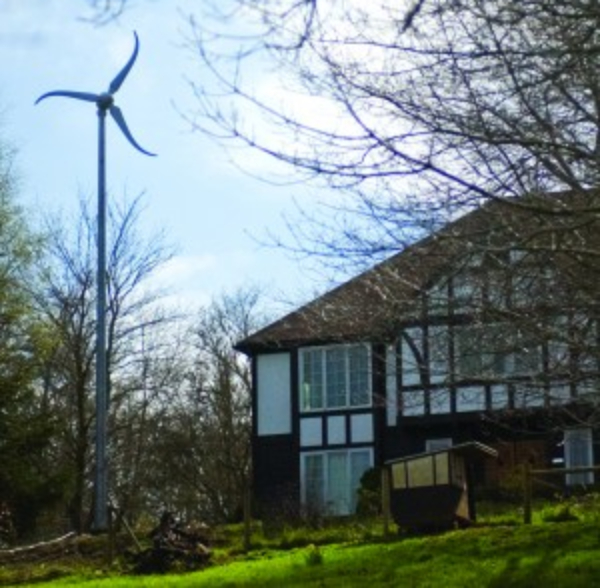
But more to the point of this case study, they’ve slashed their use of electricity tremendously. They can actually reduce their usage to the level of power they produce themselves, via 2.8 kilowatt-per-hour capacity photo-voltaic panels on a south-facing roof, a solar heating system for their water and a 2.3 Kw/h capacity wind turbine in their naturalized front yard/pasture.
“It’s hard to believe what is required, in terms of attention to detail,” says Caren. “It’s worth it, knowing that we can live within our electrical means, but you have to eliminate every electrical draw that isn’t absolutely vital – even the ‘phantom load’ from things like TVs not being watched and computers and cordless phones not being used. All those things run off little transformers that get warm and draw power whether you use them or not.”
Heating water for tea on the electric stove? No way. Black’s tea kettle sits on their wood stove. “Everything has to do double duty – that’s a guiding principle of permaculture – no free rides. Everything – and everyone – pays. Everything matters.” One tiny example: Baby chicks are incubated over winter by her food dryer, otherwise used only in the summer when they harvest and dry their home-grown food – food that is dried so it doesn’t need refrigeration.
For more in-depth information about the Titanic Lifeboat Academy, read The Daily Astorian’s article from July 22, 2005, available here.
Whether you’re “Fred,” the senior citizen scraping by on Social Security, a middle-class family with 2.2 kids and 0.8 jobs or committed activists devoted to improving the world, there’s something in permaculture for everyone. At the very least, you owe it to yourself to reduce your electrical/carbon footprint – and keep more money in your pocket.
* “Permaculture” is a copyrighted term owned by the Permaculture Institute.