Among the inherent difficulties of any discussion about the future of humanity is the fact that, unlike ants or bees, we are not predominantly parts in a “hive mind.”
As insects, ants and bees have separate bodies, but not individuated consciousness, at least not in a clear, obvious, or competent sense. When ants and bees are detached from the constant transmission of instructions from the collective mind of the hive, whether by distance, environmental conditions, or damage to their “sensory receivers,” they immediately become confused and dysfunctional. If they find their way back to the hive and restore communication, they quickly recover and get on with their meaningful duties. If they can’t or don’t, they wander aimlessly until they die.
This is true to some extent of all species that are highly socialized in their genetics, nervous systems, and behaviors, from ants in colonies and bees in hives within the insect realm, to lions in prides and elephants in herds at the mammalian level, to humans in societies at the top tier of the higher primates.
Those species and many more — some types of birds and fish come to mind — all live comfortably within the paradox of Individuality in contradistinction to Collectivity. As we move up the ladder of biological complexity, the changing balance within the paradox favors increasing development of Individuality. Collectivity never vanishes entirely in any socialized species, but Individuality makes itself felt more and more strongly.
Among certain big cats, for instance, such as cheetahs and pumas, social life doesn’t extend much beyond the immediate family of two parents and one generation of offspring. Wolves, on the other hand, live in packs. Cheetahs are solitary hunters; wolves cooperate in the hunt with remarkable sophistication. 
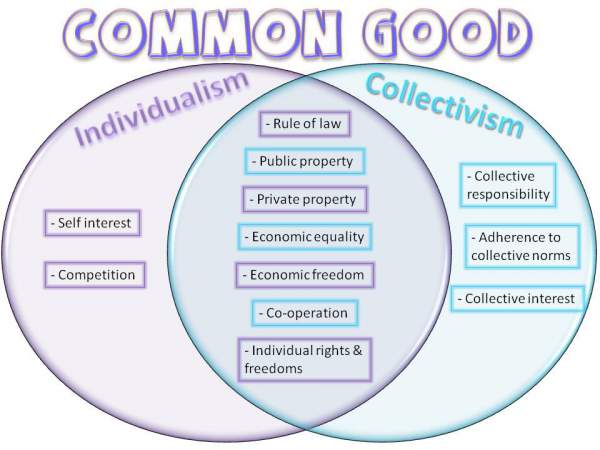
For human beings, this paradox has reached an evolutionary stage of such intense polarity that, for many of us, living within these heightened contradictory motivations is no longer comfortable. We feel various levels of conflict — from mild to nearly overwhelming — between the urge to fulfill our lives as individuals, on the one hand, and the need or duty to contribute to the overall well-being of the groups with which we identify and hold membership. These conflicts express themselves both externally, through the social or anti-social impact of our choices and behaviors, and internally, through the often invisible experiences of conscience and morality.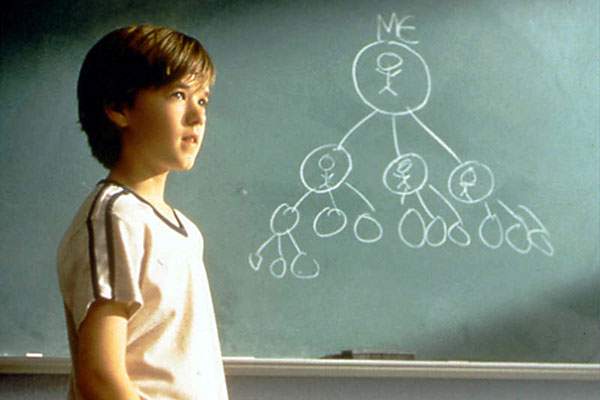
At one extreme are people whose essential motivations are consecrated to the greater good of society. For such people, anti-social behavior is anathema. When they act selfishly or with a lack of concern for others (or are accused of acting that way, whether inwardly by their own self-doubts or outwardly by others), they are instantly filled with remorse, since they feel deeply that they are, indeed, “their brother’s keeper,” and any failure to act responsibly activates pangs of conscience.
At the other extreme are people whose basic motivations focus exclusively on their own self-interest. Such individuals vary in their attitudes, from believing in the goodness of society but feeling no personal responsibility to contribute intentionally to that end, all the way to hating society and pursuing their self-aggrandizement in ways that demonstrate their contempt for others and the greater good.
In a world with billions of human beings, every permutation is not merely possible, but probable. Some people are compulsively dutiful with regard to serving society, but wish they weren’t. Others are just as strongly anti-social, but suppress or hide their narcissism or are privately guilty about their selfish disregard for others.
Is it possible for a human being to be motivated exclusively by only one side of the paradox - either Individuality or Collectivity? Perhaps, but not likely. The fundamental division of Oneness into Duality lobbies against it, as does the Newtonian astrophysics of the earth. We live on a planet that spins like a top, so that a "day" (one axial rotation) is naturally divided into "daytime" (when one side of the planet faces the sun) and "nighttime" (when that side is turned away from the sun). Even close to the poles - above the Arctic Circle and below the Antarctic Circle - where day and night are measured in periods that last months rather than days, even there it's not always one or the other. It's still an alternation in the dance of duality.
Certainly, I have no doubt that, out on the very fringes of the temperament/programming bell curve, some human beings exist who are mostly hard-wired to embrace either Individuality or Collectivity, but not both. Those few at the extremes who are Individual are deeply iconoclastic, focused only on their separateness (whether comfortably or not, since living with no sense of belonging is quite difficult) and driven toward independence. On the other side are a small number of humans whose lives are consecrated to some sense of Collective or "greater good," in whatever ways they understand that. They are dedicated ( and often devoted to the point of extreme self-sacrifice) to do everything they can to support something larger than themselves.
The percentage of human beings who live at the extremes is small, however. The great majority of people spend their lives somewhere between the two outer boundaries, but often with considerable struggle or remorse. Where they are on the scale of the paradox between “me” and “us” may change as they live, sometimes evolving in one direction or the other over the long term, and even at times careening back and forth between polarized and contradictory motivations from one moment to the next.
The challenge of this roller-coaster of genetic and psychological duality is to somehow find a way to fulfill oneself while still contributing to the success of the collective in which we live. Some of us manage to do this to our satisfaction; others never find a happy medium.
Neither side of the paradox is simple or straightforward.
Does Individuality mean simply doing whatever one wants, whatever feels good or feathers one’s own nest? Or does it mean conscientiously taking the best care of oneself by selecting what kinds of self-gratification one should pursue or allow? In other words, Individuality is not typically just pursuit of immediate self-gratification. More often, complex and circuitous decisions and choices of behavior are employed in creating a path to maximum personal fulfillment over an entire life.
Conversely, living for the good of the Collective can be vastly different depending on how one defines the boundaries of Collectivity. For some people, the limit is biological family, meaning those with whom one feels the sacred bonds of allegiance, duty, or personal affection. For others, it’s community, the “extended family” of social connections. Taken to its outward boundary, the group is the entire universe and all the life and consciousness in it. Where one draws the line about what constitutes “us” makes a huge difference in how we live.
In addition, the “Collective” can (and usually does) involve competing factions — “in-groups” versus “out-groups.” “Us” is typically juxtaposed against “Them.” So, devotion to “us” may involve opposition to “Them,” even to the point of killing “them.” This is what happens in warfare, where one group tries to defeat, subjugate, or even eradicate another group. People who live far out on the Individual side of the paradox participate in war only if it serves their own personal fulfillment, since they aren’t loyal to a particular group. People at the extreme Collective end also don’t fight in wars, because everyone is “us.” No, war is conducted by people who live in the mid-range of the Individual-Collective paradox, where personal allegiance is tied to a group defined as “us,” but which also identifies an out-group considered to be “them.” This category includes the vast majority of human beings.
I’m reminded of the re-enactment of the Battle of Gettysburg that occurred in 1913 at the 50-year reunion attended by many of the participants who were still alive half a century later. At this Civil War reunion, the seminal event of the battle’s last day — called Pickett’s Charge — was re-enacted by the participants. As the aged Confederate veterans reached the Union defensive position behind the stone wall at the copse of trees on Cemetery Ridge, both groups of veterans — Blue and Gray — spontaneously left their positions, broke into a run (insofar as they were able to run, since many were in their 70s), and intermingled with hugs and tears of comradeship. Where once they had been violent enemies committed to killing each other, the intervening 50 years had transformed them from competing factions of “Killer Angels” into a single Band of Brothers, who loved and respected their former opponents. Such are the mysteries of changing definitions of the Collective.
Collective allegiances exist where we know all the group members. These are usually local, such as one’s personal circle of friends or the Tuesday Night Bridge Club. More often, however, group loyalties extend to people we don’t see often, such as family relatives who live far away, or to people we don’t know at all, such as members of the same fraternity who attended different colleges and never met or dentists at a national convention.
Loyalties may also be also situational. An American tourist sitting in a sidewalk café in Paris who happens to overhear another American at a different table is likely to feel an immediate and strong “group connection.” The first person might be from Toledo, Ohio, while the second lives in Tucson, Arizona, which in America could be considered vastly different groups, but in Paris those distinctions are erased as nationality becomes the defining measure of “us.” Regional differences that would matter “back home” vanish in the singularity of shared national identity. So, context matters in determining inclusion or exclusion, and boundaries tend to be circumstantially fluid.
“Togetherness” is often a temporary and limited connection. Musical concertgoers share a palpable bond in loving the same band or genre of music, but that might not align them very far beyond the momentary event of the concert.
A classic example occurs among young newlyweds during the first years of marriage. They discover often that the romantic bliss of their new union is less encompassing than they presumed. After the transition from courtship as independent beloveds into cohabitation as married partners, they run into conflicts based on any number of differing social expectations
Husband: “My family always ate meals together, so we should.”
Wife: “Well, my family didn’t, so I don’t want to do that.”
Or
Wife: “You didn’t call to tell me you’d be home late.”
Husband: “What’s the big deal? I just stopped for drink with friends.”
How the couple resolves such conflicts can dramatically affect the bond between them in either direction, toward solidification of their partnership or dissipation of their love.
The benefits of Individuality versus Collectivity are very different. Individuality is about freedom and separateness, while Collectivity is about security and belonging, all of which are necessary for the full experience of human life. Each pair is meaningless without the other pair. To the extent that we are not free, we can’t be truly secure. Conversely, to the extent that we are not secure, we aren’t truly free. The same applies to separateness and belonging. The dark side of Individuality is alienation, ostracism, isolation, and loneliness. The dark side of Collectivity is forced conformity, social dependency, and loss of unique identity.
Personal astrology — natal charts and the patterns of active cycles that evolve over time — is brilliant in accurately defining how, where, and when each side of the various dualities will express itself in a given life. The entire chart offers insights into these contrasting ways of being, but two symbols stand out most vividly — Uranus and Saturn. Uranus symbolizes the urge for independence and freedom, to establish one’s particular and autonomous identity. Saturn represents the urge to achieve social alignments, to participate successfully in cultural life at varying levels of group affiliation.
Whole philosophies have been developed to support the Individual and Collective approaches to life, claiming that one or the other is valid and correct, and rationalizations exist for every different proportion in the balance of the two orientations. Human beings seem to be built in a way that requires “reasons” to support who we are and what we do. Those self-justifying constructs can be graceful or awkward, but they generally rely on abstractions rather than facts, although both facts and fictions are likely to be used selectively to put forth our arguments for whichever position we espouse.
Individuality and Collectivity in America
Throughout its history, America has struggled to reconcile the contradictions between the ideals of Individuality (i.e., Personal Freedom) versus Collectivity (i.e., Social Equality), both of which are fundamental in our national mythology. I’ve written essays about the extent to which these conflicting goals compete in the astrology that describes America, as strongly indicated in any of the various astrology charts for July 4th, 1776, that symbolize our “birth” as a nation. I won’t reiterate that material here, except to affirm that both memes are deeply embedded in our national character, and that the struggle between them is ongoing and fierce.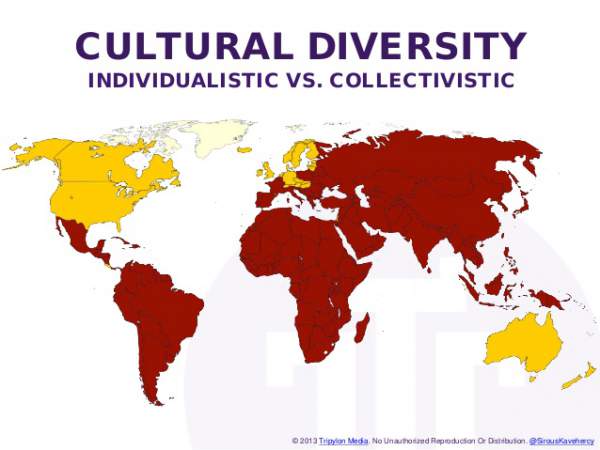
No other nation on earth enshrines Individual Freedom as we Americans do. It is arguably the First Principle underpinning our existence as a culture. Equality and Social Justice are perhaps less obvious as ideals, but they have proven over time to be as powerful as their “older brother.” The conflict in these competing mythologies has the potential to either energize us or tear us apart as a nation and a culture. Sometimes it does both, and our national history is rife with examples of excess on both sides.
One current example of that conflict surrounds the problem of climate change. Most of those who oppose climate change — either denying entirely that the problem exists or refusing to acknowledge human behavior as a significant cause — come from the U.S. Why? Because individual freedom is a sacred principle in America, and mollifying climate change would necessitate at least some infringement on personal freedom to act however one wishes.
Politically, Individualism and Collectivism duke out their differences primarily in two separate but related battlegrounds: one is in society’s approach to economics and finance, the other is government itself (i.e., “the state”).
Those who support Individualism tend to believe in “pure” capitalism, which means an unfettered, laissez-faire climate for business. Such people are typically aligned with the Republican party. They aren’t disdainful of the idea of the greater good for society, but they hold that the free market is the best arbiter for achieving that end and, more to the point, that government should not interfere with the natural economics of business. In the example above of climate change, most of those who deny it are people from the business sector for whom any government regulation is anathema. Farther out on the right-wing of the Individuality-Collectivity spectrum are Libertarians, who feel that government itself is the problem. They believe that less government is always better, with the ideal being no government at all. They see “the state” as the enemy.
Conversely, those who lean toward Collectivism tend to be associated with the Democratic party. They’re not opposed to Individuality, but they believe in a regulated business marketplace and, to varying degrees, a planned economy. Liberals especially rely on government to provide social services and a fair distribution of wealth, both of which they feel that the marketplace alone will not and cannot achieve. People who are further left on the scale (i.e., socialists) believe that inequality in wealth and power must be corrected by legal constraints imposed by the state.
For instance, health insurance tends to come down to arguments about Individuality versus Collectivity. Socialists support a government-mandated-and-run single-payer system that would provide universal health care, while those on the right call for a health care marketplace with individual choice and personal responsibility that responds to and protects existing special interest groups (mainly insurance companies). So far, that battle has been largely rhetorical. Despite the fact that we are the only dominant nation in the world without universal health care, the political right has won almost every battle and is in no danger of being overthrown. This is not to suggest that Americans are happy with the health care system we have. The war over how to take care of our population’s health continues to rage.
The two mainstream political parties differ fundamentally in their attitudes toward human fallibility, particularly in our tendency toward corruption of ideals. Democrats hold that free-wheeling business creates an imbalance of wealth that undercuts social equality and a level playing field. They see capitalism as a system that inevitably leads to corruption through the seductions of power and wealth, with human suffering an unavoidable result. Their concern is that businesses will do anything to maximize their profits and minimize their costs, which may include practices that harm society or human well-being. In a perfect world, all businesses would self-regulate for the common good, but in the real world, that often does not occur. So, Democrats believe in forced regulation by law to protect the public welfare.
Republicans hold that the health of a society is based on its wealth, and that government regulation (interference in free market commerce) destroys the source of wealth-creation. They see government and its coercive regulatory controls as the primary cause of corruption and the human suffering that results. Also, Republicans feel that the “welfare state” discourages personal incentive to take care of oneself honorably and invites abuse on the part of individual recipients of government benefits who “game the system.” Their concern is that the presumed inability to be self-supporting is too often a refusal to work.
In general, attitudes toward taxation are predictable along the right-left political spectrum. Conservatives and Reactionaries on the right believe that taxation amounts to theft, and they oppose taxes. Liberals and Progressives on the left believe that taxation is paying one’s fair share to society, and they support taxes.
Again, both sides believe in the idea of the greater good for all, but they diverge in their assumptions about how to achieve that social ideal.
None of this is news to anyone who has studied history, either of America or of humanity in general. The paradox is so fundamental in human experience that division into the various contrasting poles is nearly inevitable. Me versus Us and Us versus Them are struggles that go back as far as we care to look.
Amazing and Disturbing Times Ahead
What is news is that these traditional left-right political orientations are losing coherence and perhaps even relevance as we move closer to the 2020s. In an almost ironic twist, Republicans have become the party of social prohibitions, where laws are used to enforce conformity by defining and limiting personal lifestyles and moral behavior, while the Democratic party has embraced freedom in personal lifestyles and uses laws to enforce diversity. This apparent contradiction is, I believe, tied primarily to religious beliefs and racial attitudes.
The so-called “Populist” political movements that have sprung up around the world during the 2010s continue to assert themselves loudly and in greater strength. Movements such as the Tea Party on the far right and, to a much lesser extent, the Occupy Wall Street movement on the left have altered the social fabric, re-shuffling the deck of political calculus away from the simple duality of former Individual/Collective alliances of Right and Left.
As we lurch toward the 2020s and the political landscape becomes more chaotic, the conflicts between self-interest and shared interest remain at the center of social debates about government, but the way those seemingly contrary concerns are understood, as well as the political allegiances that result, are shifting in ways that few of us can anticipate. A Brave New World is upon us, a world where instability, shock, and surprise will be more and more commonplace, and the battle in society between Order and Change will become profoundly serious.
AUTHOR
Bill Herbst has been an astrologer for over 40 years, casting thousands of individual charts and writing books and articles which focus on what he has termed "mundane" or world astrology, i.e. applying astrology to entire societies. What astronomical and astrological events are occurring and how may they influence whole nations, particularly the U.S.? When have these configurations occurred before in history and what did people do then? Bill's commentaries are archived by year on his website (billherbst.com) along with his full bio and information on his sessions. - Ed.