

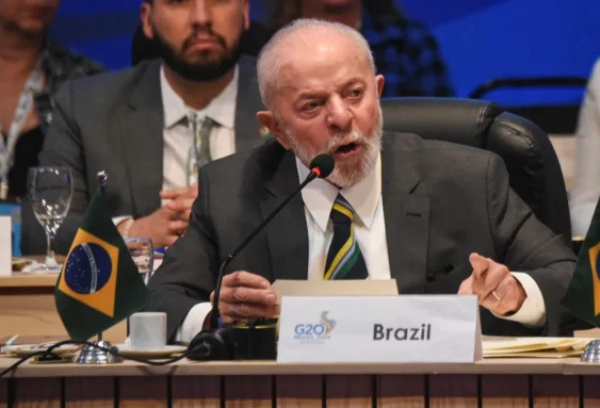
Brazil’s President Lula warns the G20 Summit is under threat amid U.S. boycott and global inequality. Discover the 5 critical challenges facing the forum.
The G20 Summit opened under a cloud of uncertainty this Saturday in Johannesburg, South Africa, as Brazilian President Luiz Inácio Lula da Silva issued a stark warning about the forum’s very survival. Speaking at the Nasrec Expo Centre, Lula described the G20 as critically weakened by geopolitical fractures, unilateral boycotts, and the growing disconnect between global economic governance and the realities faced by the world’s majority.
While he did not name the United States directly, his remarks came on a day marked by Washington’s conspicuous absence from high-level discussions—a result of former President Donald Trump’s politically charged boycott of the summit. With only a low-level diplomat representing the U.S., Lula’s message carried unmistakable weight: if the G20 fails as a space for inclusive dialogue, there may be no viable alternative.
#ÚLTIMOMINUTO | Comienza en Johannesburgo, #Sudáfrica🇿🇦, cumbre del #G20 con la presencia de presidentes, primeros ministros y otros altos representantes
— teleSUR TV (@teleSURtv) November 22, 2025
→ https://t.co/6TKzbr8LsY pic.twitter.com/iha3hy4lt2
G20 Summit Under Siege from Political Boycotts and Erosion of Trust
President Lula’s speech underscored a deepening crisis of legitimacy within the G20 Summit. The forum, originally created in 1999 to foster macroeconomic cooperation among the world’s largest economies, now faces existential questions about its relevance. Trump’s decision to boycott the event—citing unverified claims about violence against Afrikaners in South Africa—was widely condemned by Pretoria and international observers alike as inflammatory and factually unfounded.
Despite a last-minute signal that the U.S. might reconsider, the American delegation will be represented only by Marc Dillard, chargé d’affaires at the U.S. embassy in Pretoria. Dillard is expected to attend Sunday’s handover ceremony, where South Africa will formally transfer the G20 presidency to the United States, which assumes leadership on December 1.
This minimal U.S. presence during substantive negotiations sends a troubling signal, especially as Washington prepares to host the next summit. Lula emphasized that global challenges—especially debt distress, food insecurity, and energy instability—cannot be solved through isolation or threats. “If we cannot find solutions within the G20,” he stated, “we will not find them in a world conceived this way.”
Read the official G20 factsheet from the U.S. Department of State
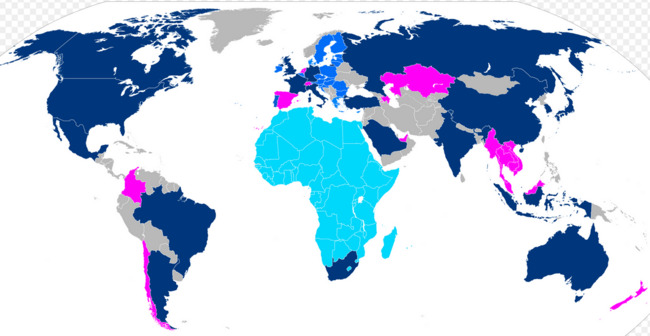
Geopolitical Context: A Fractured World Tests the Limits of Economic Diplomacy
The G20 Summit in Johannesburg unfolds against a backdrop of accelerating fragmentation in global order. The war in Ukraine continues to disrupt energy and food supply chains, hitting low- and middle-income countries hardest. At the same time, U.S.-China strategic competition, the expansion of alternative blocs like BRICS+, and rising skepticism toward Western-led institutions are reshaping the landscape of international cooperation.
Lula highlighted that 90% of the global population lives in countries marked by extreme income inequality—a reality he called “ethically unacceptable and economically unsustainable.” He urged the G20 to declare inequality a global emergency and to adopt innovative debt-for-development and debt-for-climate swaps, noting that nearly half the world’s population resides in nations that spend more on debt servicing than on health or education.
South Africa’s presidency— the first by a sub-Saharan African nation—was meant to center these concerns. Yet the boycott by major powers threatens to undermine the very purpose of the summit: to bridge divides, not deepen them.
Lula’s Call for a New Economic Compact
Beyond critique, President Lula proposed concrete actions to revitalize multilateralism. He advocated for reforming international financial architecture, including the IMF and World Bank, to give developing economies greater voice and access to liquidity. He also stressed that military force cannot resolve Latin America and the Caribbean’s deep-rooted socioeconomic challenges—a veiled rebuke to interventionist foreign policies.
On the Ukraine war, Lula acknowledged its tragic human toll but also emphasized its global ripple effects: inflation spikes, fertilizer shortages, and grain market volatility that destabilize food systems far beyond Europe. He argued that peace must be pursued through diplomacy, not ultimatums that sideline affected nations from negotiations.
Crucially, Lula tied economic justice to climate justice. He noted that vulnerable nations bear the brunt of ecological crises they did not create, yet lack the fiscal space to respond due to crushing debt burdens. His proposal for debt relief linked to climate action aims to break this cycle—a model already piloted in countries like Belize and Barbados.
The Stakes of South Africa’s Historic Presidency
Hosting the G20 Summit is a historic milestone for South Africa and the African continent. The inclusion of the African Union as a permanent G20 member, formally adopted in 2023, was meant to institutionalize this shift. Yet Trump’s disparagement of the host nation—and the U.S.’s diminished participation—risks overshadowing this progress.
South African President Cyril Ramaphosa has championed a summit theme of “Solidarity, Equality, Sustainability,” pushing for reforms to global credit ratings, fairer vaccine distribution, and green industrialization. But without buy-in from the world’s largest economy, these goals may remain aspirational.
Lula’s warning, then, is not just about one summit—it’s about the future of cooperative global governance itself. If powerful nations treat forums like the G20 as optional or weaponize them for domestic politics, the consequences will be felt most acutely by those already on the margins.
President Luiz Inácio Lula da Silva’s warning at the G20 Summit cannot be understood outside the context of his historically complex relationship with the United States. During his first presidential terms (2003–2010), Lula pursued a policy of “pragmatic autonomy”—engaging Washington on trade and security while simultaneously strengthening South-South alliances and challenging U.S.-led global institutions. His current administration has sought to rebuild ties with the Biden White House, collaborating on climate policy and Amazon protection, yet deep structural tensions remain.
Underlying Lula’s Johannesburg remarks is frustration over what he perceives as U.S. inconsistency in multilateral forums. While the Biden administration formally supports debt relief and climate finance for the Global South, its domestic political constraints—exacerbated by Trump’s resurgence—have stalled concrete action. Moreover, U.S. agricultural subsidies and trade barriers continue to disadvantage Latin American producers, contradicting the free-market rhetoric often championed in G20 communiqués.
Lula’s decision to highlight inequality and debt injustice at a summit the U.S. is effectively boycotting is both a diplomatic rebuke and a strategic positioning. By framing these issues as moral imperatives, he appeals to the Global South while subtly pressuring Washington to reconcile its rhetoric with its policies—especially as it prepares to assume the G20 presidency in December.
Spoke at the first session of the G20 Summit in Johannesburg, South Africa, which focussed on inclusive and sustainable growth. With Africa hosting the G20 Summit for the first time, NOW is the right moment for us to revisit our development parameters and focus on growth that is… pic.twitter.com/AxHki7WegR
— Narendra Modi (@narendramodi) November 22, 2025
Economic Sovereignty vs. Financial Dependency: The Roots of Lula’s G20 Intervention
The urgency in Lula’s speech stems from Brazil’s—and the broader Global South’s—ongoing struggle against a global financial architecture that perpetuates dependency. Despite being one of the world’s top 10 economies, Brazil still faces volatile capital flows, credit rating downgrades based on external criteria, and limited influence over IMF lending conditions. For Lula, this asymmetry is not incidental—it is systemic.
Recent years have seen rising calls in Latin America and Africa for de-dollarization, regional reserve currencies, and alternative development banks—initiatives Lula has cautiously endorsed. His proposal at the G20 for debt swaps tied to climate and social development is part of this larger push to decouple national sovereignty from perpetual debt cycles dictated by Western financial centers.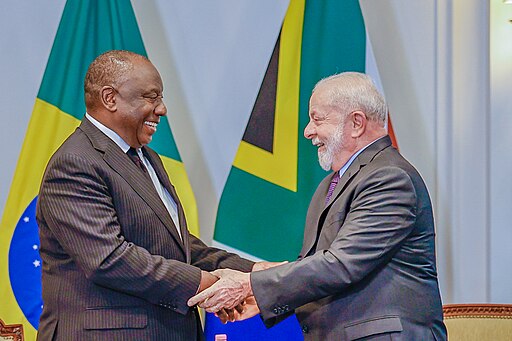 Palácio do Planalto from Brasilia, Brasil, 2023 CC BY 2.0, via Wikimedia Commons
The U.S. boycott of the Johannesburg summit amplifies these concerns. To Lula and many Southern leaders, it signals that even when invited to the table, their voices may be ignored—or worse, their sovereignty questioned, as in Trump’s baseless claims about South Africa. His intervention, therefore, is not merely rhetorical; it is a defensive maneuver to protect the G20 as one of the last remaining spaces where the Global South can collectively challenge economic orthodoxy.
#ÚLTIMOMINUTO | Comienza en Johannesburgo, #Sudáfrica🇿🇦, cumbre del #G20 con la presencia de presidentes, primeros ministros y otros altos representantes
— teleSUR TV (@teleSURtv) November 22, 2025
→ https://t.co/6TKzbr8LsY pic.twitter.com/iha3hy4lt2
Source
teleSUR: Author: JMVR. Source: Agencias. teleSUR is a Latin American multimedia platform oriented to lead and promote the unification of the peoples of the SOUTH*. We are a space and a voice for the construction of a new communications order, being a multimedia public service platform with global coverage and that produces and disseminates information from the SOUTH* for a broad base of loyal users, with a people at the center of their view.
(*)SUR: Geopolitical concept that promotes the struggle of peoples for peace, self-determination, respect for Human Rights and Social Justice.





.jpg)