
There's a lot of alarm in the media around El Niño, a climate pattern that can bring heat, drought, floods, crop stress, and strain on modern systems. But, there's no need to panic.
Every few years, the Pacific Ocean starts behaving strangely and the rest of the world starts to feel it. That’s the simplest way to understand El Niño, which has been coming up in the news a lot lately, with a notable sky-is-falling bent.
UN.org El Niño confirmed, set to fuel more extreme weather, says WMO
El Nino 2026 is no longer a vague weather headline. It is a live ocean signal with a risk surface.
350.org Three of the world’s top forecasting agencies project El Niño 2026 will likely match, or surpass, the 1878 El Niño in ocean temperature.
IndiaToday.in A strong El Nino is building in the Pacific for June to August 2026, and the WMO expects it to reshape rainfall across the world's cities.
~ Headlines from 11 June 2026, inserted by TitanicLifeboatAcademy editor
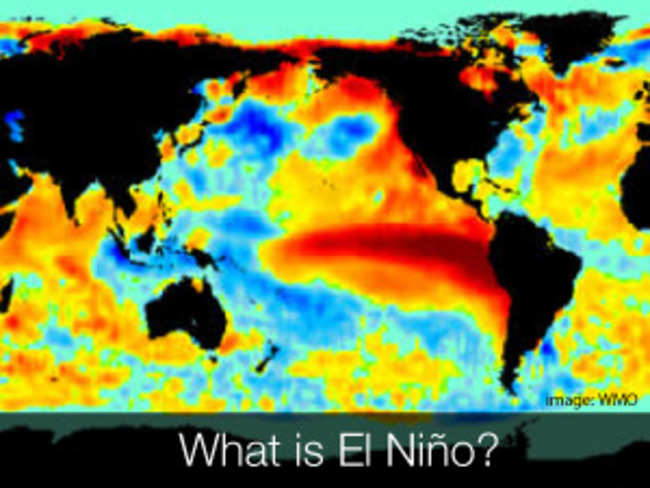
El Niño is not a storm or a single weather event. It is different from a hurricane with a name and a projected path. It’s a natural climate pattern that begins in the tropical Pacific, when sea surface temperatures become warmer than usual and disrupt normal wind and rainfall patterns. The National Oceanic and Atmospheric Administration (NOAA) describes El Niño (and the similar La Niña) as a pattern that shifts irregularly every two to seven years and has global side effects.
In ordinary language: the ocean changes, the atmosphere responds, and weather patterns around the world get rearranged. [Emphasis added.]
That doesn’t mean everyone is going to get the same weather. One region may get drought, while another may see flooding. Some areas may have warmer winters, other areas get stronger storms, crop stress, fire risk, weaker monsoons, coral bleaching, or added pressure on energy and other infrastructure.
In its June 8th update, the NOAA Climate Prediction Center said El Niño is likely to emerge soon, with an 82% chance during May–July 2026 and a 96% chance of continuing through the winter of 2026–27 in the northern hemisphere. The World Meteorological Organization said on June 2nd that El Niño conditions are developing in the tropical Pacific and are expected to influence global temperature and rainfall patterns in the months ahead, increasing the risk of extreme weather.

These bulletins are worth paying attention to, but not panicking over. In order to whip up a frenzy, the mainstream media is using words like “dreaded Super El Niño” to describe what they think is going to unfold.
Panic is what happens when people sense an impending risk but don’t have a plan. Preparedness is what happens when people look at the risk sanguinely, and take sensible action. [Emphasis added.]
That distinction matters, because every major weather story now gets pulled into the same exhausting machine: alarm, denial, politicization, expert-speak, social media hysteria, and thousands of people trying to sell you something. By the time ordinary people are done scrolling, they are either terrified or paralyzed, neither of which is a useful response.
The takeaway is not to prepare for El Niño, as such, but to prepare for how El Niño might impact already brittle systems we all depend upon. That’s preparing at the right level.
If El Niño results in a heavy rainfall event, don’t stockpile toilet paper, but do know if local drainage systems near you have been chronically neglected. You don’t necessarily need canned food to get through a heat wave, but if the grid in your area is already over-capacity, extreme heat might result in power outages or prolonged blackouts, so think about how to prepare for that possibility. If you rely on local farmers as a source of clean food (and we all should, really!), ask them how they plan to mitigate the impact of droughts; there might even be an opportunity to glean a few pointers from those whose living relies on lived experience.
 Modern life has trained too many people to outsource resilience. The utility company will fix it. The store will restock it. The government will warn us. The insurance company will cover it. The experts will explain it.
We should all know better than that. Your best source of safety, your best source of security, and your best source of stamina is you. To bolster confidence that this is actually true, try reclaiming a few ordinary competencies that never should have been lost in the first place.
Do you have enough stored drinking water for a few days? Do you know how you would collect, filter, or boil water if service were interrupted? If you rely on a well, do you have a plan for power outages? If you live in a flood-prone area, do you know where water moves on your property when it rains hard?
Then look at heat. Do you have a way to stay cool if the power goes out this summer? Do you have battery-powered fans, shade, ventilation, electrolyte packets, and a plan for vulnerable people or animals? Do you know which medications are affected by heat? Have you thought through what you would do during several days of extreme temperatures — either heat or cold?
Then look at your food stores. This does not mean panic-buying pallets of beans, it just means keeping a reasonable pantry buffer so that price spikes, storms, delayed deliveries, or short-term disruptions do not immediately become a personal emergency. Rice, oats, beans, canned fish, canned tomatoes, broth, shelf-stable milk, coffee, tea, pet food, basic medicines, and the foods your household actually eats are all more useful than buckets of freeze-dried meals you’ll probably never touch. [See "If You Eat, Store Food" ~ Ed.]
Look around the outside of your house: gutters, drainage, roof leaks, trees, erosion, sump pumps, flash-flood risk, fire breaks, and insurance documents. Take photos of your home and major belongings before you need them. Make sure important papers are backed up digitally and physically. Boring? Yes. Absolutely the kind of thing you want to procrastinate doing. But is it useful? You won’t know until you need it and then you’ll understand why an ounce of prevention is worth a pound of cure.
Get a battery-powered weather radio, charged battery banks and extra batteries, flashlights, printed phone numbers, and a way to receive local alerts.
Finally, think about neighbors. The most underrated preparedness tool is knowing who nearby has a chainsaw, a truck or tractor, medical knowledge, extra water, a generator, and a good head on their shoulders; and knowing who is elderly or may need to be checked on when the power is out. Do the utmost to channel what it means to love your neighbor.
The impending impact of El Niño is a good excuse to do some simple stocktaking. Weather is one of the best reminders that civilization is more fragile than it looks, and also that human beings are less helpless than we actually are.
In an age when every stressor becomes a spectacle, sanity may be the most underrated prep of all.
Source
CollapseLife began as a response to the growing disconnect between rosy headlines and the reality of faltering systems. We’re Zahra Sethna and Stephen Mostad, a husband and wife team who are both trained as writers and editors. We’re not about quick rants or trendy takes. We dig deep — using our journalism backgrounds to blend data, history, and real-world strategies — without jargon, fluff, or screaming. We do like a bit of snark, though. We call it “a thinking person’s guide” because we respect your brain. Collapse isn’t a prediction; it’s a lens through which to see the past and the future. History shows us how societies rise, strain, and reshape themselves — and how humans carry on in spite of these sea changes. We study those patterns to understand what’s happening today and build personal and community resilience. ~ from CollapseLife/About
We at TLA find CollapseLife to be an impeccable source for a "big picture" view of world events and a good guide for understanding and preparation. ~ Ed.