The real story is a global system already losing resilience
Editor’s note: El Niño is arriving with unusual force. Here, I look at where the impacts are likely to land hardest, why the timing matters, and what practical steps we can take as the system loses more of its resilience.
1. Introduction
For several years now, the ocean has been running hot without properly cooling off between events. Food and energy prices rose after the last set of shocks and never fully came back down. Fertiliser and energy markets are still recovering from recent disruption through the Gulf. Arctic sea ice recorded its lowest winter maximum, and early summer extent was among the lowest on record. Stacked together, these have burned through the buffer the global system used to have when a bad year hit.
That’s the backdrop El Niño is arriving into.
As of July 2026, El Niño is underway, strengthening, and likely to persist into next spring. NOAA puts the odds of it lasting through early spring 2027 at 97%, with an 81% chance it reaches “very strong” intensity between October and December. Should that happen, it will rank among the largest El Niño events since records began in 1950.[1]
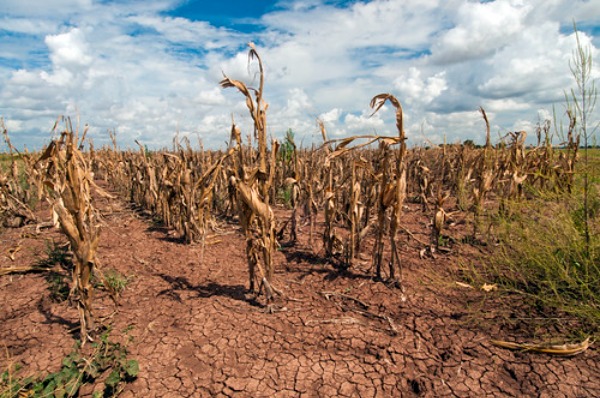
On its own, that would be significant enough. El Niño is the biggest driver of year-to-year climate variability on the planet, redistributing heat and rainfall across the tropics, disrupting monsoons, raising drought risk in some regions and flood risk in others, and nudging global temperatures upward with a lag.
We are so fucked.
Global sea-surface temperatures have already broken June records. Copernicus reports that daily global sea-surface temperatures passed the previous highs from 2023 and 2024, peaking on 21 June 2026. The oceans have been running unusually warm for several years now, without the cooling that normally follows.
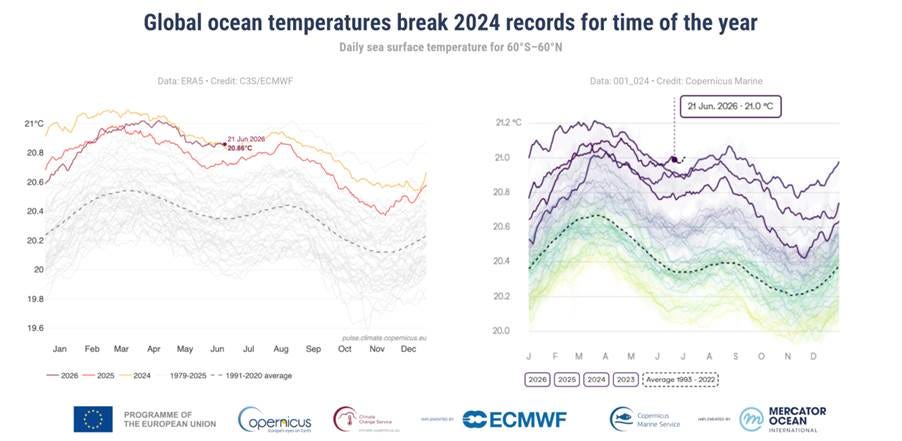
Fig 1: Global Ocean Temperatures (Source: Copernicus,2026)
A strong El Niño is now stacking on top of an ocean that never properly recovered from the last warm phase. The La Niña that should have provided relief was far weaker than expected. Marine heatwaves persisted, sea ice recovery stayed poor, and inflation never returned to its old baseline. Neither did energy or fertiliser markets.
El Niño is arriving as an amplifier, at the exact moment the wider system has less capacity to absorb a shock.
What’s playing out is declining resilience, in slow motion. The baseline keeps shifting downwards. Food, energy, housing, insurance, public finances and supply chains have all shown some version of this since Covid: still functioning, but needing more subsidy, more complexity and more strain to deliver a lower standard of stability.
It’s the kind of pattern Joseph Tainter described in societies managing rising complexity for diminishing returns.
… and now El Niño is arriving as a force multiplier for everything already under strain.
2. India carries the most obvious human risk.
The monsoon has already started badly - June 2026 came in almost 40% below average, the fifth-driest June since 1901, and forecasters expect July rainfall to stay below normal too. Why does this matter? Because the monsoon delivers roughly 70% of India’s annual rainfall, nearly half of Indian farmland has no irrigation, and July is the critical sowing window for rice, cotton, corn and soybeans.[3]
Recent rain has narrowed the national deficit, but the distribution remains patchy, another monsoon break is expected, and sowing is already running behind last year’s pace.[4] The climate crisis is ultimately a food crisis.
The consequences cascade in a fairly direct line: a weak or erratic monsoon stresses crops, which stresses rural incomes and food prices; the heat that comes with it drives up electricity demand, which strains the grid, which in turn worsens heat exposure for poorer households. Fertiliser costs are layered on top of all of it, and a climate anomaly becomes a systems problem quickly.
Heat is the other obvious risk. The danger here is high temperature with humidity, where sweat, the body’s main cooling mechanism, starts to fail. The 35°C wet-bulb threshold marks the rough upper limit of human survivability, but people become ill and die well below that, especially if they are old, poor, working outside or living without reliable cooling.[13]
3. Australia faces a comparable squeeze.
The Bureau of Meteorology expects a strong to very strong El Niño, with around half its models pointing to a peak among the highest since 1950. Rainfall is likely to run below average across southern and eastern Australia from July to September, with above-average temperatures across most of the country.[5]
The risks are heat combined with dry soils, fire weather, agricultural stress, insurance costs and energy demand, all at once. A positive Indian Ocean Dipole (IOD) developing alongside El Niño would make this worse still; the two have a track record of compounding each other.
Southeast Asia is exposed too. The FAO flags drought risk across South and Southeast Asia - India, Myanmar, Thailand, Cambodia, Vietnam, the Philippines, Indonesia and Timor-Leste - with rainfed rice and maize bearing the brunt.[6]
That reach extends well past the region itself, because rice, palm oil, coffee, cocoa, sugar and animal feed are the commodities through which climate instability actually reaches household budgets.
4. The UK is also exposed, but not in the same way.
The links between El Niño and British weather are indirect and loose. The Met Office notes that El Niño can tilt autumn and early winter towards milder, wetter and windier conditions, with a colder, calmer stretch later in winter, but the UK link is loose. ENSO is a secondary factor here, not the main event.[7]
The real risk for the UK is import dependence. The UK relies heavily on imported fruit, vegetables and seafood, much of it from countries facing their own climate and water pressures.[8]
Full supermarket shelves give an impression of stable food supplies, but that is the output of a long, energy-intensive, credit-dependent, climate-exposed supply chain, and says little about how resilient that chain actually is. When several food-producing regions are stressed simultaneously, the UK typically feels it first through price: persistent inflation, smaller portions, more substitutions, higher insurance, and poorer households pushed toward the edge of nutritional adequacy.
Empty shelves come later, if at all. It’s the inflation that gets you, and the worse off experience that disproportionately.
5. The Strait of Hormuz is a fertiliser story as much as an oil story.
The Strait previously carried around a third of globally traded urea and close to half of seaborne sulphur. Shipments have started recovering after recent disruption, but volumes remain below normal and large quantities have been delayed.[9]
Put together, the convergence looks extremely serious. El Niño stresses crops; Hormuz disruption stresses fertiliser; fertiliser stress raises the cost of maintaining yields; energy stress raises the cost of transport, irrigation, processing and refrigeration. Governments then respond with subsidies, export restrictions, price controls or emergency stock releases.
This is a sign of a system running low on elasticity. The World Bank’s food security update points the same way, warning that fertiliser prices are rising sharply and that the effects of reduced fertiliser use may not show up until harvests come in later this year.[10]
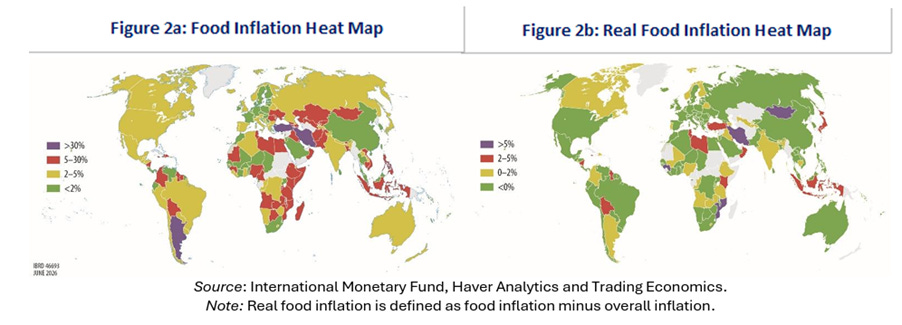
Fig 2: Food Inflation Heat Map (Source: IMF, 2026)
That lag is important: these systems tend to look fine right up until it catches up with them.
A few slower background signals belong in the picture. The Met Office reported the March 2026 Arctic winter maximum as the lowest on record, with June extent among the lowest ever recorded for that date and early melt along the Atlantic edge.[11] The Atlantic overturning circulation (AMOC), which helps keep Europe’s climate mild and shapes rainfall patterns globally, is under increasing pressure from warmer seas, melting ice and shifting salinity.[12]
A strong El Niño alone won’t trigger an AMOC collapse. But sea ice, ocean heat, food prices, fertiliser markets, public finances and household budgets are all showing strain from the same underlying loss of resilience. The system keeps functioning; it just takes more energy, money and complexity to keep it that way.
6. What to do with this
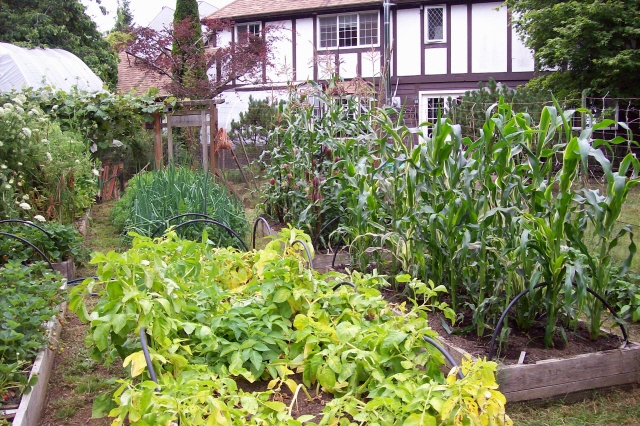
For most people the useful response is building buffers. That means storing food while prices are ratcheting upward, storing water as drought and heat events grow more frequent, improving soil while fertiliser supply hinges on gas prices, geopolitics and shipping lanes, and saving seed while global supply chains keep proving brittle.
Building local skills and capacity is a rational response to a system that’s growing less reliable. Do a permaculture design course if this is practical for you.
For households in the UK, the sensible preparations are fairly obvious: more staples, more water storage, better soil, more local food skills, more redundancy in energy, heating, cooling and cooking, closer attention to pet food and medicines that can’t easily be swapped, more growing capacity, and less reliance on just-in-time assumptions.
If your cat/dog/pet has specific dietary requirements, factor this in. My cat requires a veterinary urinary food and so I keep a 6-month buffer in case the manufacturer experiences disruption.
During heatwaves, put extra water out for the critters. It’s the least we can do considering human civilisation is driving the collapse of their environment.
For anyone managing land, the lesson is to design for variability - warming, drought and cold all at once, rather than any single scenario. Shelter belts, water storage, drainage, soil organic matter, hardy crops, protected growing, perennials alongside annual staples, compost, biochar, seed saving, low-input systems: none of these solve the underlying predicament of course, but each one reduces dependence on systems that are becoming less dependable.
7. What to watch
A few markers should make the picture clearer over the coming months. Does India’s monsoon recover through July and August? Does Australia head into spring hot, dry and under a positive IOD? Do rice, palm oil, coffee or sugar prices start moving sharply? Do fertiliser prices stay elevated, and do export restrictions start appearing? Does Arctic sea ice stay weak through the late-summer minimum? Does 2027 start to look like another record year for global temperature?
If several of these move together, 2026/27 becomes a ratchet year rather than a one-off.
For up-to-date and easy to comprehend data across different areas of the polycrisis, follow Prof Eliot Jacobson on here and social media.
El Niño is an amplifier here. The real story is ecological overshoot meeting a system with less resilience left in reserve. Shocks travel further than they used to. Recovery takes longer. Costs stay higher after each one. Complexity keeps increasing while the returns on that complexity keep shrinking.
That’s the polycrisis in plain terms - not collapse arriving next Tuesday, but a harder world arriving unevenly, through the ordinary channels of price, weather, food, water, energy, migration, politics and institutional strain.
References
[1] NOAA Climate Prediction Center, ENSO Diagnostic Discussion, 9 July 2026.
[2] Copernicus Marine and Copernicus Climate Change Service, daily global sea-surface temperature records, June 2026.
[3] Reuters, “India warns of below-average July monsoon rains after particularly dry June,” 30 June 2026.
[4] Reuters, “India’s monsoon to weaken over west, south, slowing crop sowing,” 9 July 2026.
[5] Australian Bureau of Meteorology, ENSO update and July–September outlook, June 2026.
[6] FAO, “El Niño is coming. Here is where the risks to agriculture are highest,” June 2026.
[7] UK Met Office, “El Niño declared for 2026 as Pacific warms,” June 2026.
[8] Defra, United Kingdom Food Security Report 2024, Theme 2: UK food supply sources.
[9] Reuters, fertiliser shipments through the Strait of Hormuz, June 2026.
[10] World Bank, Food Security Update, July 2026.
[11] UK Met Office, Arctic and Antarctic sea ice briefing, June 2026.
[12] Carbon Brief, AMOC explainer, April 2026.
[13] S.C. Sherwood and M. Huber, “An adaptability limit to climate change due to heat stress,” Proceedings of the National Academy of Sciences, 2010
Author
Adrian Lambert: I have a background in transformation and complex systems based in the UK. Alongside that work, I study and practise permaculture, and write about ecological overshoot, resilience, and the decline of industrial civilisation.