
How Nature Responds to Control
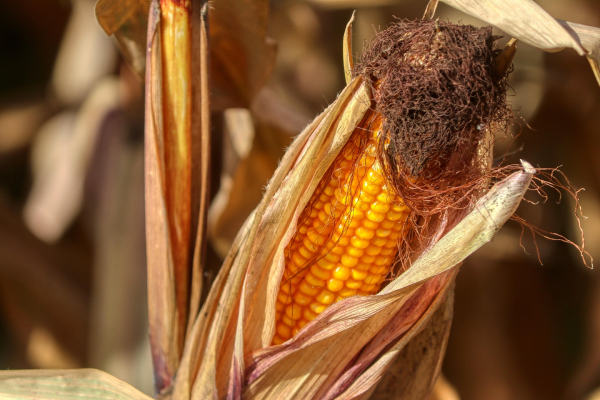
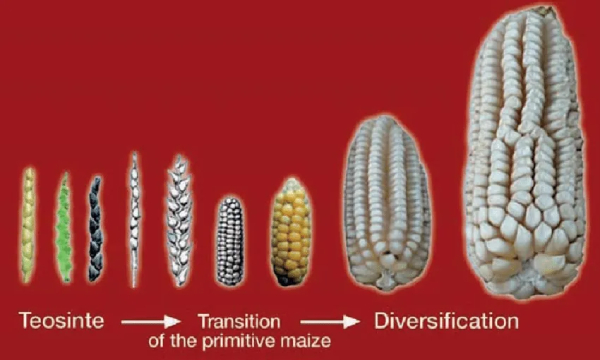
What was once a modest wild grass called teosinte has evolved over the centuries into the industrial monocrop we call corn.
It is now prevalently entrenched, overly engineered, and systematically controlled, feeding an industrial system that degrades ecosystems and sickens the very people it claims to nourish. At the root of this damage is modern society’s incessant need to control.
No one summarized the folly of control better than Rachel Carson: “The ‘control of nature’ is a phrase conceived in arrogance, born of the Neanderthal age of biology and philosophy, when it was supposed that nature exists for the convenience of man.”
Monocrops themselves are but one of many examples of our attempt to create a heavily controlled environment. But as Vandana Shiva points out, the logic of monocrops arises from very simplistic thinking:
“Monocultures of the mind create monocultures of the field—and both are deadly.”
In short, not only is modern industrial corn agriculture a slavery of a singular plant species, as we will see it has a rather large death toll and damage caused to human society as a result. Perhaps we could conclude that corn has had its revenge for our sins against it.
How We Got Corn As We Know It
Corn, like many other grasses, has its history embedded in human cultural evolution. Around 9,000 years ago, Indigenous peoples in Mesoamerica began a slow, reciprocal relationship with this plant. Through careful selection, humans reshaped teosinte into maize. In return, maize shaped civilizations. Beyond feeding growing human settlements, it became a part of mythology, even considered a sacred relative. And while we could point to the errors of how humans structured entire societies around corn and built civilizations that weren’t sustainable even then, the sense that corn was simply a commodity would become a fate even worse.
With European colonization and later industrial capitalism, corn was stripped of its cultural context and redesigned for yield and uniformity. The 20th century accelerated this rupture: hybridization, synthetic fertilizers, pesticides, irrigation, and fossil fuels turned corn into an industrial input. Worse further, corn went from being a simple food stable and transformed into animal feed, ethanol, sweeteners, plastics, adhesives and other industrial products.
“The machine has become the substitute for the human soul.” Lewis Mumford
The Consequences of Modern Corn Agriculture
I don’t believe any life form wants to be confined and controlled. Humans have learned that the trick to controlling and confining other humans is to convince them they are free. But that only works so long. At some point perhaps even the dumb apes will realize we are treated in similar manner to the corn. Maybe the corn is one step ahead of us as it seems to be fighting back.
Air Pollution
A major study published in Nature Sustainability found that the air pollution alone from corn production in the U.S. is linked to approximately 4,300 premature deaths every year.
The primary culprit is ammonia emissions from nitrogen fertilizers. When ammonia is released into the air, it reacts with other pollutants to form fine particulate matter (PM2.5), which can be inhaled deep into the lungs.
Imagine the disdain the “civilized” folk would have towards Mesoamerican societies for sacrificing 12 humans every day to the corn gods. We do far far worse for the gods of industrial society.
Health
There’s no doubt that since the early 1900s, farmers have used corn and/or cornmeal as the primary "finishing" feed to quickly fatten hogs and cattle before slaughter. Imagine being surprised by what it would do to humans once concentrated in various forms inside labs.
A comprehensive study published in Nature Medicine (2025) estimates that sugar-sweetened beverages (SSBs) are responsible for approximately 340,000 global deaths annually from type 2 diabetes and cardiovascular disease. The vast majority of these sweeteners are derived from corn.
While biochemically similar to sucrose (table sugar), high fructose corn syrup has been specifically investigated for its role in increasing liver fat and metabolic disorders, which are precursors to fatal heart disease.
Land Use and Crop Dominance
For the 2025/2026 season, U.S. farmers are estimated to have planted nearly 100 million acres of corn, the highest in nearly nine decades.
Corn accounts for more than 95% of total U.S. feed grain production.
Approximately 27.5% to 30% of all U.S. crop area harvested is corn.
Corn, soybeans, and hay together account for roughly 75% of all harvested cropland in the country.
Keep in mind this means we put all of the resources, land use, government subsidies into these crops and they don’t even feed people really. Not real nutrition for sure. They are killing nature, water, air and humans. And for what?
Corn Doesn’t Even Make a Profit
Here’s the real kicker: It will cost a forecasted average of $917 per acre to plant corn in 2026, while the average market price is expected to be only $4.10 per bushel. Farmers are projected to lose an average of $0.88 per bushel. And this has been happening for years.
There are many statistics I could share on this, but this is the most important one:
Since 1995, American taxpayers have spent more than $116 billion specifically on corn subsidies.
Why do all this? Why pay for a failing crop that poisons the environment and people?
It’s Locked In
The reasons are surprisingly simple, but emblematic of our “Neanderthal age of biology and philosophy.”
Approximately 40% of the U.S. corn crop is diverted to ethanol production. Almost every gallon of gasoline you pump at a station is actually a cocktail: roughly 90% petroleum and 10% corn alcohol (ethanol). While it’s better than previous additives like lead, you can see why lobbyists work their paid politicians hard to keep corn cheap.
There are other reasons, including rural economics. What’s astonishingly clear though is that the priorities of the federal government is increasing taxpayer-funded welfare for oil companies, big agriculture, others who spend millions on campaigns and lobbying (including foreign governments) while radically slashing spending that goes directly to actual people living in the country the politicians are sworn to serve.
And for what? Let’s just say it plain and simple: the system is designed to serve the needs of the system itself. Not the people in it.
“The technological society is not one in which technology serves man, but one in which man serves technology.”-Jacques Ellul
The unfortunate part of this framing about corn getting its revenge seems to be that we are collectively punished for the crimes of the few who actually make these decisions. That said, unless we collectively decide to do something about it, that’s the natural consequences.
That means we have to recognize and reject political leaders and political systems that don’t serve people and the planet. We are no doubt victims… but I do believe victims have choices. We can simply give up, or we can fight back like our lives depend on it. I don’t like those choices, but the world sometimes offers few good choices.
If you’ve read this far, thank you for joining me on this brief summary on industrial corn production. I don’t really know why, but my waking thoughts were about corn fighting back. I couldn’t move forward with the day until I committed them to paper… lol or a digital post as it were.
Author
Justin MacAffee: EarthKeeper, wilderness survival instructor, author of upcoming books Ten Myths of Progress; Becoming EarthKeepers.